Search This Blog

Saturday, January 19, 2013

St. Teresa Benedicta of the Cross: A Poem on the Holy Spirit


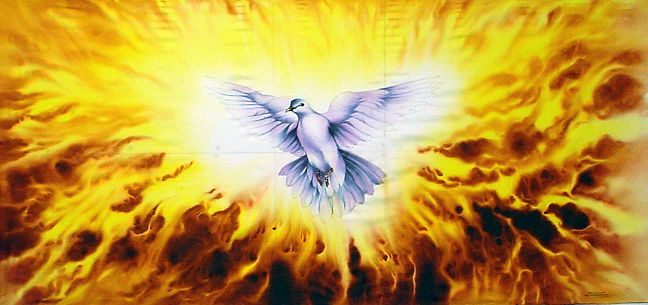
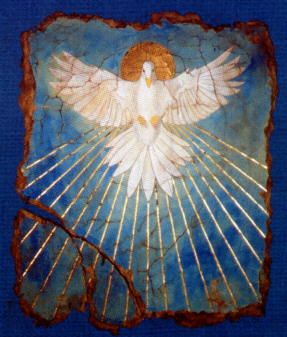
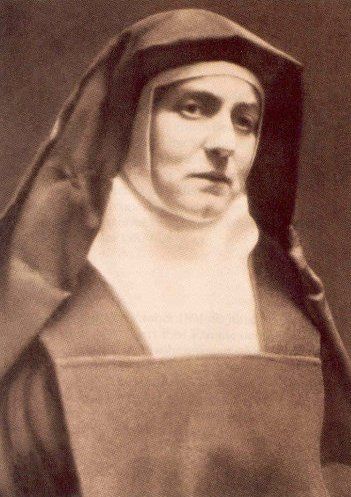
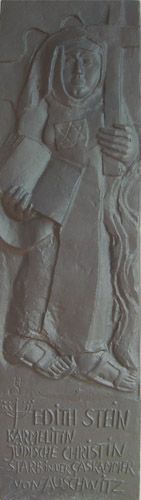
Today, August 9, we celebrate the feast of Edith Stein, Saint Teresa Benedicta of the Cross (1891-1942), a Polish philosopher who converted to Catholicism and joined the Discalced Carmelite Order. Despite her noted philosophical writings, as well as her conversion and service to the Lord as a religious, Saint Teresa was killed at Auschwitz along with millions of other Jews during the second world war. Her life and writings remain, inspiring us to find hope in the Lord, even in times of great struggle and suffering. Among her final works was a poem in honor of the Holy Spirit of God, written in seven verses.


1. Who are you, sweet light, that fills me
And illumines the darkness of my heart?
You lead me like a mother's hand,
And should you let go of me,
I would not know how to take another step.
You are the space
That embraces my being and buries it in yourself.
Away from you it sinks into the abyss
Of nothingness, from which you raised it to the light.
You, nearer to me than I to myself
And more interior than my most interior
And still impalpable and intangible
And beyond any name:
Holy Spirit eternal love!


2. Are you not the sweet manna
That from the Son's heart
Overflows into my heart,
The food of angels and the blessed?
He who raised himself from death to life,
He has also awakened me to new life
From the sleep of death.
And he gives me new life from day to day,
And at some time his fullness is to stream through me,
Life of your life indeed, you yourself:
Holy Spirit eternal life!


3. Are you the ray
That flashes down from the eternal Judge's throne
And breaks into the night of the soul
That had never known itself?
Mercifully relentlessly
It penetrates hidden folds.
Alarmed at seeing itself,
The self makes space for holy fear,
The beginning of that wisdom
That comes from on high
And anchors us firmly in the heights,
Your action,
That creates us anew:
Holy Spirit ray that penetrates everything!


4. Are you the spirit's fullness and the power
By which the Lamb releases the seal
Of God's eternal decree?
Driven by you
The messengers of judgement ride through the world
And separate with a sharp sword
The kingdom of light from the kingdom of night.
Then heaven becomes new and new the earth,
And all finds its proper place
Through your breath:
Holy Spirit victorious power!


5. Are you the master who builds the eternal cathedral,
Which towers from the earth through the heavens?
Animated by you, the columns are raised high
And stand immovably firm.
Marked with the eternal name of God,
They stretch up to the light,
Bearing the dome,
Which crowns the holy cathedral,
Your work that encircles the world:
Holy Spirit God's molding hand!


6. Are you the one who created
the unclouded mirror
Next to the Almighty's throne,
Like a crystal sea,
In which Divinity lovingly looks at itself?
You bend over the fairest work of your creation,
And radiantly your own gaze
Is illumined in return.
And of all creatures the pure beauty
Is joined in one in the dear form
Of the Virgin, your immaculate bride:
Holy Spirit Creator of all!


7. Are you the sweet song of love
And of holy awe
That eternally resounds around the triune throne,
That weds in itself the clear chimes
of each and every being?
The harmony,
That joins together the members to the Head,
In which each one
Finds the mysterious meaning of his being blessed
And joyously surges forth,
Freely dissolved in your surging:
Holy Spirit eternal jubilation!

On St. Teresa Benedicta of the Cross


"I even believe that the deeper one is drawn into God, the more one must 'go out of oneself'; that is, one must go to the world in order to carry the divine life into it."

On August 9, we celebrated the feast of Edith Stein, Saint Teresa Benedicta of the Cross (1891-1942), a Polish philosopher who converted to Catholicism and joined the Discalced Carmelite Order. Saint Teresa wrote extensively about the unique and God-given feminine vocation, as evidenced by the life of Our Blessed Mother. Despite her noted philosophical writings, as well as her conversion and service to the Lord as a religious, Saint Teresa was killed at Auschwitz along with millions of other Jews during the second world war. Her life and writings remain, inspiring us to find hope in the Lord, even in times of great struggle and suffering.

Born in Breslau, Poland, Edith was the youngest child of a large observant Jewish family. From an early age, she was a gifted child who enjoyed learning and demonstrated great academic promise. She greatly admired her mother's strong faith. However, as her studies progressed, Edith had difficulty reconciling her phenomenological beliefs with that of faith. By her teenage years, she had forsaken Judaism and proclaimed herself an atheist—much to her parents’ disappointment.

Prior to the first world war, Edith attended the Universities of Breslau and Göttingen, studying philosophy. After the war ended, she continued her advanced studies at the University of Freiburg, and was awarded her doctorate in philosophy Suma Cum Laude. Despite her brilliant philosophical mind, Edith continued to struggle with what she termed her “search for the truth.” One evening, while at the home of some Catholic friends, Edith read the Life of Saint Teresa of Avila, and when she finished it she said happily: "This is truth." Her discovery of the life of Saint Teresa paved the way for her exploration of Catholicism and eventual conversion.

After her conversion, Edith spent her days teaching, lecturing, writing, and translating, and she soon became known as a celebrated philosopher and author. She spoke frequently of the vocational call of women, and the special and unique role they served in the Catholic life. For example, at a convention of Catholic Academics in 1930, Dr. Stein said: “Many of the best women are almost overwhelmed by the double burden of family duties and professional life-- or often simply of gainful employment. Always on the go, they are harassed, nervous, and irritable. Where are they to get the needed inner peace and cheerfulness in order to offer stability, support, and guidance to others?...To have divine love as its inner form, a woman's life must be a Eucharistic life. Only in daily confidential relationship with the Lord in the tabernacle can one forget self, become free of all one's wishes and pretensions, and have a heart open to all the needs of others.”

Edith presented the Blessed Virgin Mary as being the role model for all women, saying: “Whether she is a mother in the home, or occupies a place in the limelight of public life, or lives behind quiet cloister walls, she must be the handmaid of the Lord everywhere. So had the Mother of God been in all the circumstances of her life....Were each woman an image of the Mother of God, a Spouse of Christ, an apostle of the Divine Heart, then would each fulfill her feminine vocation no matter what conditions she lived in and what worldly activity absorbed her life.”

Herself, Edith was especially devoted to Our Blessed Mother, writing extensively about both her strength and her suffering. One such poem, beautiful and simple, follows:

JUXTA CRUCEM TECUM STARE

Today I have stood with you beneath the Cross
And felt more certainly than ever before,
That you became our Mother beneath the Cross.
How faithfully an earthly mother strives
To fulfill her dying son's last wish.
But you were the handmaid of the Lord,
Subduing wholly your own life and being
To the life and being of God incarnate.
You have taken your own to your heart
And with your heart bleeding from bitter sorrow
Have purchased for each one of us new life.
You know us all, our wounds and our defacement,
But you know also the heavenly radiance
In which your Son's love eternally bathes us.
And so you carefully direct our footsteps.
You find no pain too great to bring us to our goal,
So those whom you have chosen for companions,
To stand beside you at the eternal throne,
Must stand beside you here beneath the Cross
And with hearts bleeding from bitter sorrow
Purchase heavenly radiance for the precious souls
With whom the Son of God entrusted you.


Despite her prolific writing and speaking engagements, Edith felt called to a different life—a life of quiet contemplation of the Lord as a member of the Carmelite community. When her position as a teacher at the Educational Institute of Munich was terminated due to growing pressure from the Nazis, Edith’s spiritual director have his approval for her to enter the Discalced Carmelite Nuns’ cloistered community at Cologne-Lindenthal. The following April, Edith received the Habit of Carmel and the religious name of "Teresa Benedicta of the Cross.”

When the Jewish persecution increased in violence and fanaticism, Sister Teresa Benedicta soon realized the danger that her presence was to the Cologne Carmel, and she asked and received permission to transfer to a foreign monastery. In December 1938, she secretly crossed the border into Holland where she was warmly received in the Carmel of Echt. There she wrote her last work, The Science of the Cross, an exploration of suffering she would soon experience firsthand.

Soon after her arrival, Holland ceased to be a refuge. The country was invaded by the Germans, and persecution of the Jews began in earnest. In response, the Dutch bishops protested the Nazi mistreatment and deportation of the Jews by publishing a public letter, read at all Masses. The Nazis retaliated and on August 2, all Catholics of Jewish descent were arrested, including Sister Teresa Benedicta and her sister Rosa Stein.
When the Gestapo came to the Carmel of Echt, Saint Teresa, taking Rosa by the arm, said: "Come let us go for our people." In her cell, the sisters found, written on the back of a small picture, her last will and testament: “May the Lord accept my life and death for the honor and glory of his name, for the needs of his holy Church - especially for the preservation, sanctification, and final perfection of our holy Order, and in particular for the Carmels of Cologne and Echt - for the Jewish people, that the Lord may be received by his own and his Kingdom come in glory, for the deliverance of Germany and peace throughout the world, and finally for all my relatives living and dead and all whom God has given me; may none of them be lost.”

Beaten and half-starved, the sisters were deported first to Westerbork prison camp in Northern Holland. Sister. Teresa was able to send a message to her superior that she was still wearing her Carmelite habit, and planned to keep wearing it as long as she could. However, a yellow Star of David had been sewn to the outside of the simple brown habit.

At the camp, Saint Teresa Benedicta comforted and cared for frightened mothers and their little children. Before her arrival in Auschwitz, she managed to smuggle one last message to her mother prioress: "I am content now. One can only learn the Scientia Crucis if one truly suffers under the weight of the Cross. I was entirely convinced of this from the very first and I have said with all my heart: Hail, Cross, our only hope."

It was not long after that the work camp was emptied, and those kept prisoner there put on cattle trains headed to Auschwitz. Reports from those who were close to Sister Teresa Benedicta in those final days show her to have been a woman of remarkable interior strength, giving courage to her fellow travelers and helping to feed and bathe the little ones when even their mothers had given up hope and were neglecting them. One woman who survived the war has written a description of Stein during the time their group was awaiting transportation to “the East.” She wrote, “Maybe the best way I can explain it is that she carried so much pain that it hurt to see her smile...In my opinion, she was thinking about the suffering that lay ahead. Not her own suffering — she was far too resigned for that — but the suffering that was in store for the others. Every time I think of her sitting in the barracks, the same picture comes to mind: a Pieta without the Christ.”

Saint Teresa Benedicta of the Cross died in the gas chambers upon arrival at Auschwitz on August 9, 1942. Out of the unspeakable human suffering caused by the Nazis in western Europe in the 1930's and 1940's, her life blossomed into a beautiful example of dedication, consecration, prayer, fasting, and penance. Even though her life was snuffed out by the evil of genocide, her memory stands as a light undimmed in the midst of evil, darkness, and suffering. "One can only learn the science of the Cross by feeling the Cross in one’s own person."


From the Homily of Pope John Paul II in October 1998, on the event of her Canonization:
"God is spirit, and those who worship Him must worship in spirit and truth" (Jn 4:24).


Dear brothers and sisters, the divine Teacher spoke these words to the Samaritan woman at Jacob's well. What He gave His chance but attentive listener we also find in the life of Edith Stein, in her "ascent of Mount Carmel". The depth of the divine mystery became perceptible to her in the silence of contemplation. Gradually, throughout her life, as she grew in the knowledge of God, worshipping Him in spirit and truth, she experienced ever more clearly her specific vocation to ascend the Cross with Christ, to embrace it with serenity and trust, to love it by following in the footsteps of her beloved Spouse: Saint Teresa Benedicta of the Cross is offered to us today as a model to inspire us and a protectress to call upon.


We give thanks to God for this gift. May the new saint be an example to us in our commitment to serve freedom, in our search for the truth. May her witness constantly strengthen the bridge of mutual understanding between Jews and Christians.


Saint Teresa Benedicta of the Cross, pray for us! Amen.”


Selected Quotations of Saint Teresa Benedicta of the Cross
“As for what concerns our relations with our fellow men, the anguish in our neighbor's soul must break all precept. All that we do is a means to an end, but love is an end in itself, because God is love.”

”Every true prayer is a prayer of the Church; by means of that prayer the Church prays, since it is the Holy Spirit living in the Church, Who in every single soul 'prays in us with unspeakable groanings.”
”If anyone comes to me, I want to lead them to Him.”
”In order to be an image of God, the spirit must turn to what is eternal, hold it in spirit, keep it in memory, and by loving it, embrace it in the will.”
”On the question of relating to our fellowman - our neighbor's spiritual need transcends every commandment. Everything else we do is a means to an end. But love is an end already, since God is love.”

”The limitless loving devotion to God, and the gift God makes of Himself to you, are the highest elevation of which the heart is capable; it is the highest degree of prayer. The souls that have reached this point are truly the heart of the Church.”

”Those who join the Carmelite Order are not lost to their near and dear ones, but have been won for them, because it is our vocation to intercede to God for everyone.”
"The way of faith gives us more than the way of philosophical thought: it gives us God, near to us as person, who loves us and deals with us mercifully, giving us that security which human knowledge cannot give. But the way of faith is dark.”
“Whatever did not fit in with my plan did lie within the plan of God. I have an ever deeper and firmer belief that nothing is merely an accident when seen in the light of God, that my whole life down to the smallest details has been marked out for me in the plan of Divine Providence and has a completely coherent meaning in God’s all-seeing eyes. And so I am beginning to rejoice in the light of glory wherein this meaning will be unveiled to me.”

“God is there in these moments of rest and can give us in a single instant exactly what we need. Then the rest of the day can take its course, under the same effort and strain, perhaps, but in peace. And when night comes, and you look back over the day and see how fragmentary everything has been, and how much you planned that has gone undone, and all the reasons you have to be embarrassed and ashamed: just take everything exactly as it is, put it in God’s hands and leave it with Him. Then you will be able to rest in Him — really rest — and start the next day as a new life.”

“Learn from Saint Thérèse to depend on God alone and serve Him with a wholly pure and detached heart. Then, like her, you will be able to say ‘I do not regret that I have given myself up to Love’.”

“O my God, fill my soul with holy joy, courage and strength to serve You. Enkindle Your love in me and then walk with me along the next stretch of road before me. I do not see very far ahead, but when I have arrived where the horizon now closes down, a new prospect will prospect will open before me, and I shall meet it with peace.”


Lord, God of our fathers,
you brought Saint Teresa Benedicta
to the fullness of the science of the cross
at the hour of her martyrdom.
Fill us with that same knowledge;
and, through her intercession,
allow us always to seek after you, the supreme truth,
and to remain faithful until death to the covenant of love
ratified in the blood of your Son
for the salvation of all men and women.
We ask this through Christ, our Lord. Amen.


St. Teresa of Avila Quote


Sunday, January 13, 2013

Today is the Feast of the Baptism of the Lord


PRAYER

Almighty ever-living God, who, when Christ had been baptized in the River Jordan and as the Holy Spirit descended upon him, solemnly declared him your beloved Son, grant that your children by adoption, reborn of water and the Holy Spirit, may always be well pleasing to you. Through our Lord Jesus Christ, your Son, who lives and reigns with you in the unity of the Holy Spirit, one God, for ever and ever.

Today the Church celebrates the Solemnity of the Baptism of Our Lord. This brings to an end the season of Christmas. The Church recalls Our Lord's second manifestation or epiphany which occurred on the occasion of His baptism in the Jordan. Jesus descended into the River to sanctify its waters and to give them the power to beget sons of God. The event takes on the importance of a second creation in which the entire Trinity intervenes.

In the Eastern Church this feast is called Theophany because at the baptism of Christ in the River Jordan God appeared in three persons. The baptism of John was a sort of sacramental preparatory for the Baptism of Christ. It moved men to sentiments of repentance and induced them to confess their sins. Christ did not need the baptism of John. Although He appeared in the "substance of our flesh" and was recognized "outwardly like unto ourselves", He was absolutely sinless and impeccable. He conferred upon the water the power of the true Baptism which would remove all the sins of the world: "Behold the Lamb of God, behold Him Who takes away the sin of the world".

Many of the incidents which accompanied Christ's baptism are symbolical of what happened at our Baptism. At Christ's baptism the Holy Spirit descended upon Him; at our Baptism the Trinity took its abode in our soul. At His baptism Christ was proclaimed the "Beloved Son" of the FClick here for commentary on the readings in the Extraordinary Form of the Roman Rite.ather; at our Baptism we become the adopted sons of God. At Christ's baptism the heavens were opened; at our Baptism heaven was opened to us. At His baptism Jesus prayed; after our Baptism we must pray to avoid actual sin.

— Excerpted from Msgr. Rudolph G. Bandas


The Feast of the Baptism of the Lord
The mystery of Christ’s baptism in the Jordan by St John, the Precursor, proposes the contemplation of an already adult Jesus. This mystery is infinitely linked to the Solemnities of the Lord’s birth and the Epiphany that we have just celebrated, as in some ways it takes up and represents their significance to us.

At Christmas we have contemplated the human birth of the Word incarnate by the Virgin Mary. In the 4th century, the Fathers of the Church deepened the understanding of the faith with regard to the Christmas mystery in the light of Jesus’ Humanity. They spoke of the Incarnation of the Word already working like the ‘Christification’ of that humanity that he had assumed from His mother. Or put in simpler terms: Jesus is the Christ from the first instant of conception in Mary’s spotless womb because He Himself, with His Divine Power, consecrated, anointed and ‘Christified’ that human nature with which He became incarnate.

In the mystery of the Epiphany, we then meditated on Christ’s manifestation to all nations that was represented by the Magi, the wise men from the East, who came to adore the Child.

Now, in the mystery of Christ’s Baptism in the Jordan River, we again encounter and represent the truth of the Lord’s incarnation and His manifestation as the Christ. Jesus’ Baptism is in fact His definitive manifestation as the Messiah or Christ to Israel, and as the Son of the Father to the entire world. Here we find the dimension of the Epiphany which was His manifestation to all nations. The Father’s voice from heaven shows that Jesus of Nazareth is the eternal Son and the descent of the Holy Spirit in the form of a dove shows the Trinitarian nature of the Christian God. The true and unique God, Father, Son, and Holy Spirit, shows Himself in Christ, through Him, with Him and in Him.

The Baptism in the Jordan returns to the great Christmas theme of ‘Christification’, Jesus of Nazareth’s spiritual anointing, His presentation as the Anointed One per excellence, the Messiah or the One sent by the Father for the salvation of mankind. The Spirit that descended on Jesus shows and seals in an incontrovertible way the ‘Christification’ of Jesus’ humanity that the Word had already fulfilled from the first moment of His miraculous conception by Mary. Jesus, from the very beginning, was always the Lord’s Christ, He was always God. Yet, His one, true humanity, that which is perfect in every way, as the Gospel records, constantly grew in natural and supernatural perfection. ‘And Jesus increased in wisdom, in stature, and in favour with God and with men’ (Lk2:52). In Israel at 30 years of age, one reached full maturity and therefore could become a master. Jesus came of age and the Spirit, descending and remaining on Him, definitively consecrated His whole being as the Christ.
The same Spirit, that descended on the water of the River Jordan wafted over the waters during the first creation. (Gen 1:2) Therefore, the Baptism in the Jordan presents yet another truth: that Jesus has started a new creation. He is the second man (1 Cor 15:47) or the last Adam (1 Cor 15:45), that comes to repair the first Adam’s guilt. He does this as the Lamb of God that takes away our sins. ‘Looking at the events in light of the Cross and Resurrection, the Christian people realised what happened: Jesus loaded the burden of all mankind’s guilt upon His shoulders; he bore it down into the depths of the Jordan. He inaugurated his public activity by stepping into the place of sinners.’ (J Ratzinger, Jesus of Nazareth, Bloomsbury 2007, p18)
Excerpted from the Congregation for the Clergy

Commentary for the Readings in the Extraordinary Form:
First Sunday after Epiphany


"Jesus came to Nazareth, and was subject to them" (Gospel).

"Subject to them" is the awe-inspiring phrase which sums up His Life. Humbly did He abide by the decrees of human law! Obedience to "My Father's business" must come first, as a guide to all other business, if heaven is to find our family unbrokern (Prayer).

If Jesus withdraws from us as a test of our love or if we lose Him by the commission of sin, we will not regain the joy of His Presence amid the distractions of "relatives and acquaintances;" but we will find Him "in the temple" at Confession and Communion.

So-called "modern" ideas and practices are evicting Christ from the home. As as antidote, at the family meal let us read aloud from the New Testament. "Let the word of Christ dwell" in your home (Epistle). Then will your family, even though living in "obscurity" as did the Holy Family, advance "in wisdom and. . .grace before God and men" (Gospel).

— Excerpted from My Sunday Missal, Confraternity of the Precious Blood

Thursday, December 13, 2012

Beautiful old prayer card of St. John of the Cross


Read St. John of the Cross' Works Online

 (St. John of the Cross imprisoned.)


A great site with the works of St. John of the Cross online:

http://www.jesus-passion.com/John_of_the_Cross.htm

LITANY OF ST. JOHN OF THE CROSS - for his Solemnity


LITANY OF ST. JOHN OF THE CROSS

Lord, have mercy on us.
Christ, have mercy on us.
Lord, have mercy on us. Christ hear us.
Christ, graciously hear us.

God the Father of Heaven, Have mercy on us.
God the Son, Redeemer of the world, Have mercy on us.
God the Holy Ghost, Have mercy on us.
Holy Trinity, one God, Have mercy on us.

Holy Mary, Mother of God, Pray for us.
Queen and Beauty of Carmel, Pray for us.

Saint John of the Cross, Pray for us.
St. John, our glorious Father, Pray for us.
Beloved child of Mary, the Queen of Carmel, Pray for us.
Fragrant flower of the garden of Carmel, Pray for us.
Admirable possessor of the spirit of Elias, Pray for us.
Foundation stone of the Carmelite Reform, Pray for us.
Spiritual son, and beloved Father of St. Teresa, Pray for us.
Most vigilant in the practice of virtue, Pray for us.
Treasure of charity, Pray for us.
Abyss of humility, Pray for us.
Most perfect in obedience, Pray for us.
Invincible in patience, Pray for us.
Constant lover of poverty, Pray for us.
Dove of simplicity, Pray for us.
Thirsting for mortification, Pray for us.
Prodigy of holiness, Pray for us.
Mystical Doctor, Pray for us.
Model of contemplation, Pray for us.
Zealous preacher of the Word of God, Pray for us.
Worker of miracles, Pray for us.
Bringing joy and peace to souls, Pray for us.
Terror of devils, Pray for us.
Model of penance, Pray for us.
Faithful guardian of Christ's Vineyard, Pray for us.
Ornament and glory of Carmel, Pray for us.

Lamb of God, Who takest away the sins of the world: Spare us, O Lord.
Lamb of God, Who takest away the sins of the world: Graciously hear us, O Lord.
Lamb of God, Who takest away the sins of the world: Have mercy on us.

V. Holy Father Saint John of the Cross, pray for us:
R. That we may be made worthy of the promises of Christ.

Let us pray.

O God, Who didst instill into the heart of Saint John of the Cross, Thy Confessor and our Father, a perfect spirit of self-abnegation, and a surpassing love of Thy Cross: grant, that assiduously following in his footsteps, we may attain to eternal glory. Through Christ Our Lord. R.  Amen.